

Graveyard Keeper 2 Engine: 3D Rebuild Confirmed, Name Not
The original runs on Unity, but the sequel engine has never been named. The one official technical statement is a move from 2D pixel work to a 3D build.
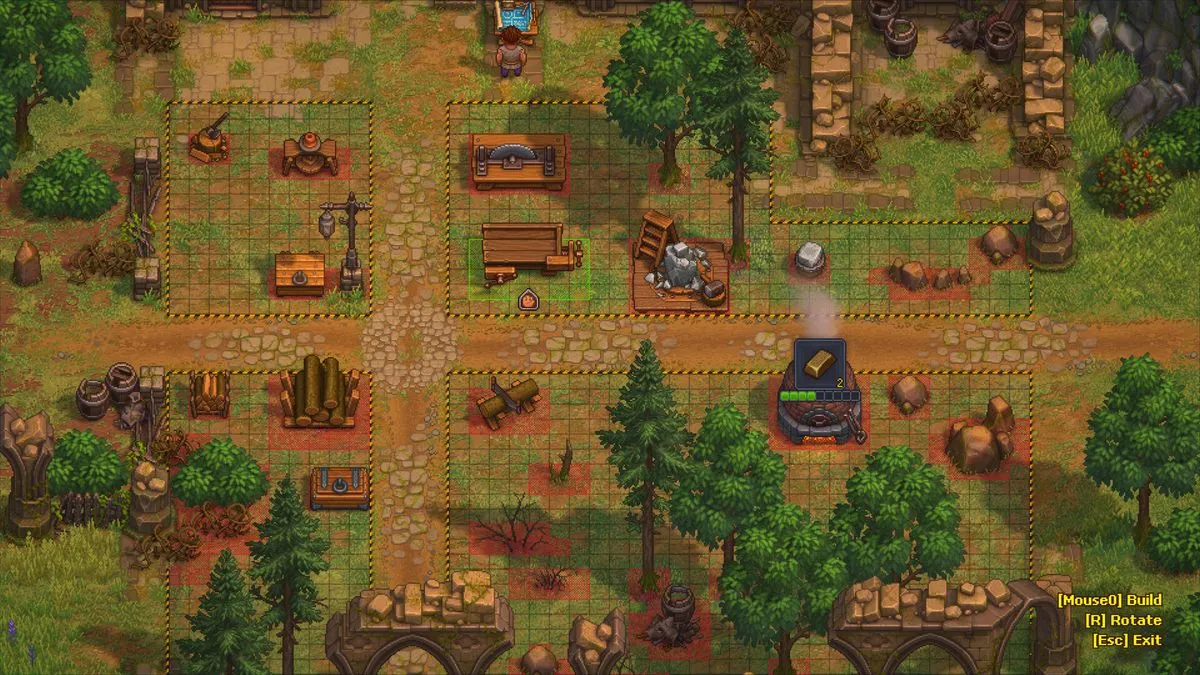
Two sentences: the original runs on Unity. The sequel’s engine has never been named.
The official site, the Steam store page and all seven official posts contain no engine name.
The one technical statement the developers did make is this: the sequel moved from the original’s 2D pixel construction to a fully 3D build.
So any “Graveyard Keeper 2 uses X engine” claim you find elsewhere is an inference, not official information.
The original: Unity
The original game’s Wikipedia infobox lists Engine: Unity.
One caveat: Lazy Bear Games never stated this on its own pages or posts. So writing it up as an “official statement” would be inaccurate.
What the developers said about the sequel
The 30 July 2026 dev diary is the only technical official statement. The key passage:
The original Graveyard Keeper was a stylized pixel-art game … during the development, our tech tree was constrained by the limitations of 2D graphics. For Graveyard Keeper 2, we decided not to hold ourselves back and built everything in 3D, for a world we could fully experiment with.
The post lists six concrete consequences:
| Change | Official wording |
|---|---|
| Dynamic sun and shadows | “the sun now genuinely orbits the Earth … You can set your watch by the shadows of the spruce trees” |
| Night shadows | “Now, night means proper, dynamic shadows” |
| Water shader | A dedicated water shader written for deep mountain ponds |
| Wind-reactive foliage | “the entire forest and grass now react to the wind as the weather changes” |
| Volumetric fog | “thanks to the genuine 3D volume, we were able to afford beautiful, deep fog” |
| Town building kit | A separate modular kit built specifically for The Town |
Do not conflate one thing: “built in 3D” is not “switched to a 3D camera”.
The post also states the camera angle stays fixed, and Steam’s user tags still include 2.5D and Pixel Graphics.
So it still looks like pixel art. The underlying world simply went from a flat plane to a volume you can experiment in.
Technical facts you can verify in the store
These are all fields anyone can check.
- Platforms: Windows
true, macOS and Linuxfalse. - Features: full controller support, DualShock and DualSense support, custom volume controls, playable without timed input, stereo sound, Steam Cloud, Family Sharing. No Steam Workshop.
- Minimum PC: Windows 10 x64 or higher, Intel Core i3 (13th gen) or similar, 6 GB RAM, GeForce GTX 1650 or similar, DirectX 12, 4 GB available storage.
- Recommended PC: Intel Core i5 (13th gen) or similar, 8 GB RAM, GeForce RTX 3060 or similar, 4 GB available storage.
- User tags: includes
2.5D,Pixel Graphics,Automation,Dark Humor,Post-apocalyptic.
On consoles: Switch and Switch 2 are both estimated at 792 MB, support TV, tabletop and handheld modes, and support touch input. Switch’s compatibility on Switch 2 is labelled “behaviour is consistent with Nintendo Switch”.
Performance expectations
The bar has clearly risen.
The original was a pixel management sim. The sequel adds dynamic shadows, wind-reactive foliage and volumetric fog, and the official minimum GPU is a GTX 1650 with an RTX 3060 recommended.
Demo feedback backs this up:
- Smooth: “The game runs without bugs or crashes on PC”, “Running perfect xsx”.
- Problems: “Sorry, Graveyard Keeper 2 Demo is a stuttering mess on PS5 Pro”, “It works so baaad on Steam Deck: 30 fps, a lot of drops and a lot of heat on Medium settings”.
These are community observations from the demo, not the full release.
Test it on your own hardware with the free demo first. The link is on the demo page.
Modding
There is no official statement about mod support for the sequel.
The original had no official mod tools, but the community built a co-op mod and a save editor. The sequel’s Steam feature list has no Workshop entry, so the only confirmed fact right now is: no official mod platform.
Whether the sequel can be modded will have to wait for community testing after launch. The multiplayer situation is on the multiplayer page.
Why the engine question gets mixed up with the AI question
Both come from the same cause: the developers disclose very little technical detail.
The dev diary covers the 3D move and the visual results, but not the engine or toolchain. And the co-founder’s AI posts make people look for technical evidence.
The two issues are actually unrelated on the evidence. The full AI evidence trail is on the AI dispute page.
Still unannounced
- The engine name.
- Target frame rate and resolution per platform.
- Whether macOS or Linux versions follow.
- Whether official mod tools exist.
Sources
- Official dev diary “Dissecting the Art and Visuals” (30 July 2026): https://store.steampowered.com/news/app/4358690/view/1839676055885334
- Steam store page and official API fields: https://store.steampowered.com/app/4358690/Graveyard_Keeper_2/
- Wikipedia, Graveyard Keeper (original engine): https://en.wikipedia.org/wiki/Graveyard_Keeper
- Nintendo Switch store page: https://www.nintendo.com/us/store/products/graveyard-keeper-2-switch/
- Demo performance feedback: https://www.reddit.com/r/GraveyardKeeper/comments/1wg6bs0/graveyard_keeper_2_demo_released/